The Winemaker's Essential Guide to Industry Resources for Sustainable Viticulture
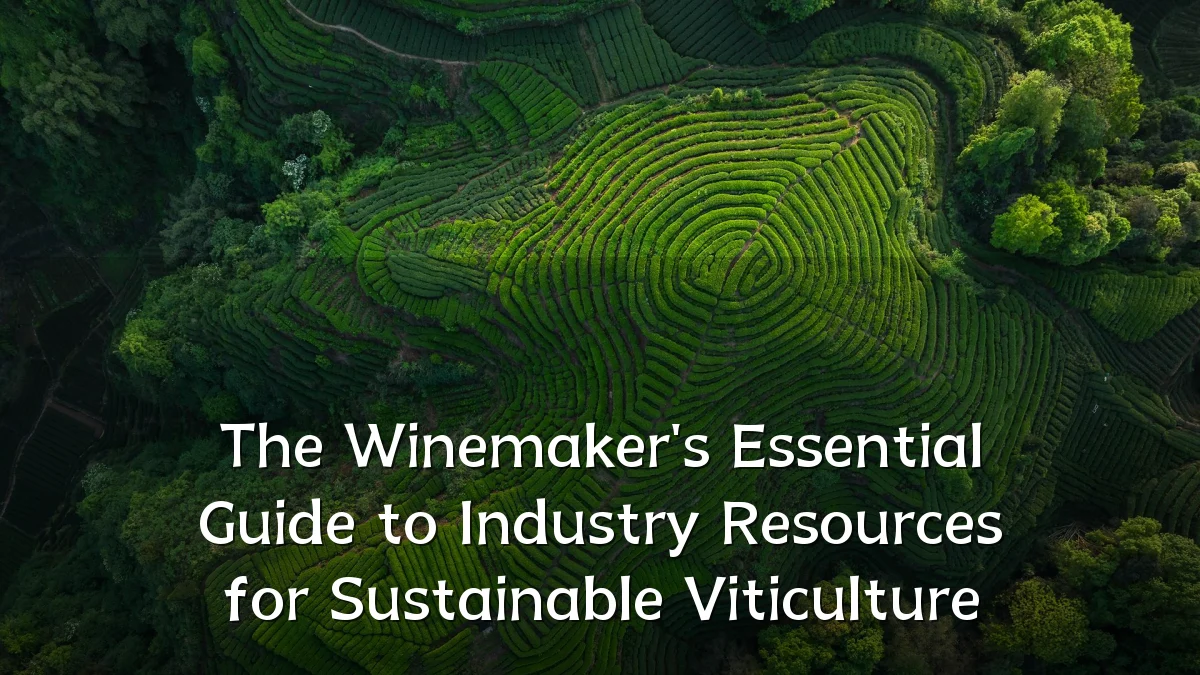
As consumer demand and regulatory pressure mount, a growing array of industry resources is helping vintners integrate sustainability into vineyard management. These tools—ranging from certification frameworks to analytics platforms—aim to reduce environmental impact without sacrificing quality. Below, the analysis explores recent trends, background context, core user concerns, likely near-term impact, and developments to monitor.
Recent Trends in Sustainable Viticulture Resources
Over the past several growing seasons, resource availability has expanded markedly. Key trends include:

- Certification programs: Regional schemes (e.g., sustainable winegrowing certifications in California, New Zealand, and parts of Europe) now offer structured guidelines and third-party verification.
- Digital decision-support tools: Platforms integrating weather data, soil moisture sensors, and pest models help growers optimize irrigation, fertilization, and spray timing.
- Carbon and water footprint calculators: Free or low-cost online tools allow wineries to benchmark emissions and water use against industry baselines.
- Peer networks and knowledge exchanges: Grower-led groups and extension workshops increasingly share region-specific practices for cover cropping, compost use, and biodiversity corridors.
Background: The Evolution of Industry Support
Systematic support for sustainable viticulture emerged from scattered university research in the 1990s. Early efforts focused on integrated pest management and erosion control. By the 2010s, trade bodies and wine regions began codifying best practices into formal resource portals. Today, many organizations—such as the Wine Institute, the International Organisation of Vine and Wine (OIV), and regional grower associations—publish technical guides, case studies, and self-assessment tools. This evolution reflects a shift from standalone environmental compliance to a more holistic understanding of sustainability that includes economic viability and social equity.

User Concerns: Practical Barriers and Information Overload
Despite the proliferation of resources, winemakers frequently express reservations. Common concerns include:
- Cost and time investment: Certification fees, equipment upgrades, and data collection require upfront capital and labor that small producers may lack.
- Regional specificity: Many resources are developed in major wine regions and may not translate well to lesser-known appellations with distinct microclimates.
- Credibility and greenwashing: Confusion over which certifications carry genuine weight versus marketing labels can undermine trust in sustainability claims.
- Complexity of integration: Managing multiple tools (water, carbon, pest) separately can overwhelm vineyard managers, especially without a unified platform.
Likely Impact: Shifts in Resource Adoption
The current resource landscape is likely to drive incremental rather than radical change in the short term. Wineries with dedicated sustainability staff will continue to lead adoption, while smaller operations may rely on free, low-barrier tools. Pressure from retailers and distributors for certified sourcing will standardize benchmarks across supply chains. Over the next few years, expect a consolidation of digital tools into more integrated suites, and a push for mutual recognition among different certification schemes to reduce redundancy.
What to Watch Next
Several developments could reshape the resource ecosystem:
- Remote sensing and AI: Satellite imagery and machine learning models promise precise vineyard monitoring, but affordability and data privacy remain open questions.
- Climate adaptation grants: Government and industry-funded programs may subsidize conversion to drought-tolerant rootstocks or renewable energy in wineries.
- Consumer-facing transparency: QR codes on wine labels linking to sustainability data could create direct market rewards for resource adoption.
- Regulatory shifts: New carbon border taxes or water-use restrictions in major markets will increase the stakes for verifiable sustainable practices.